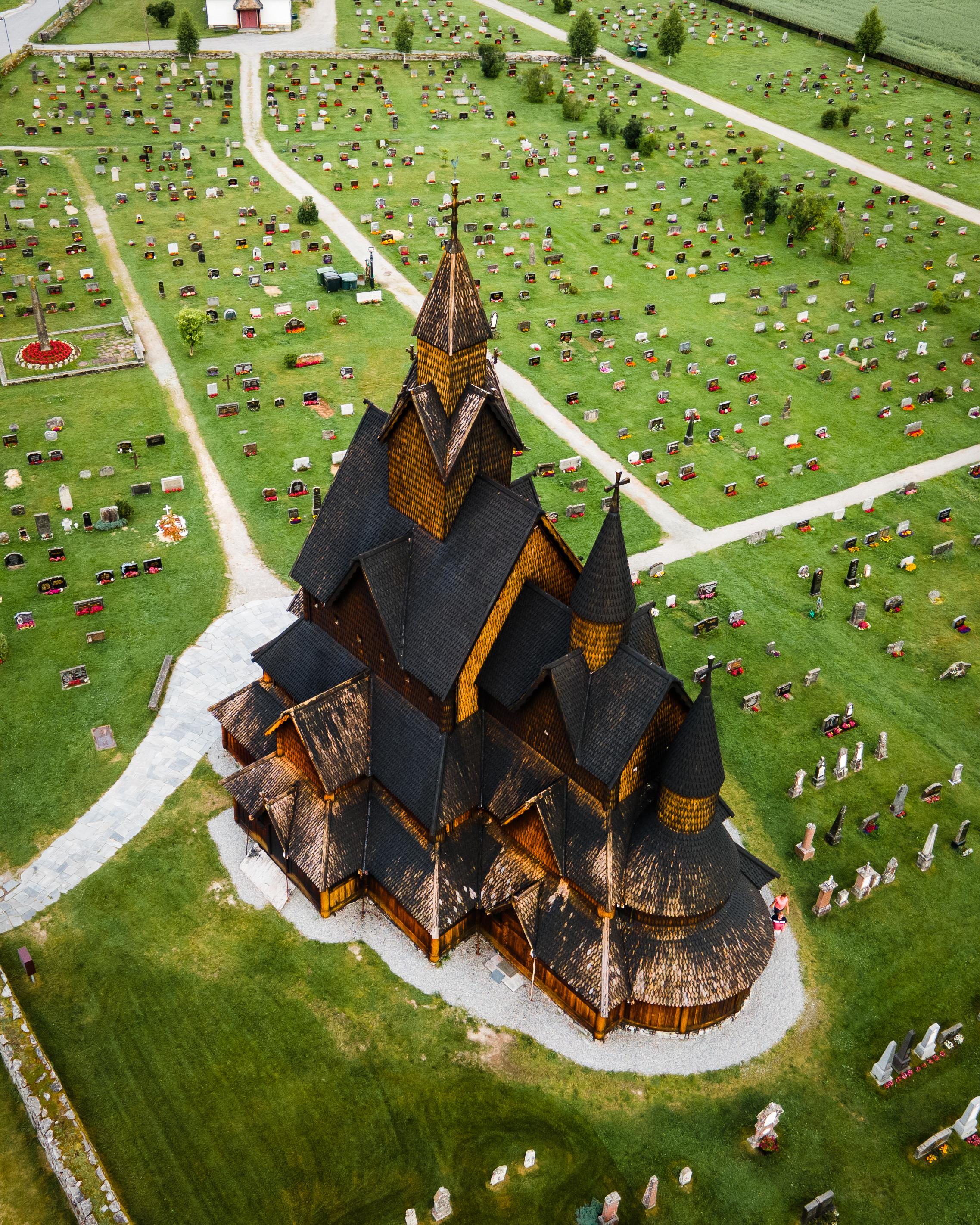
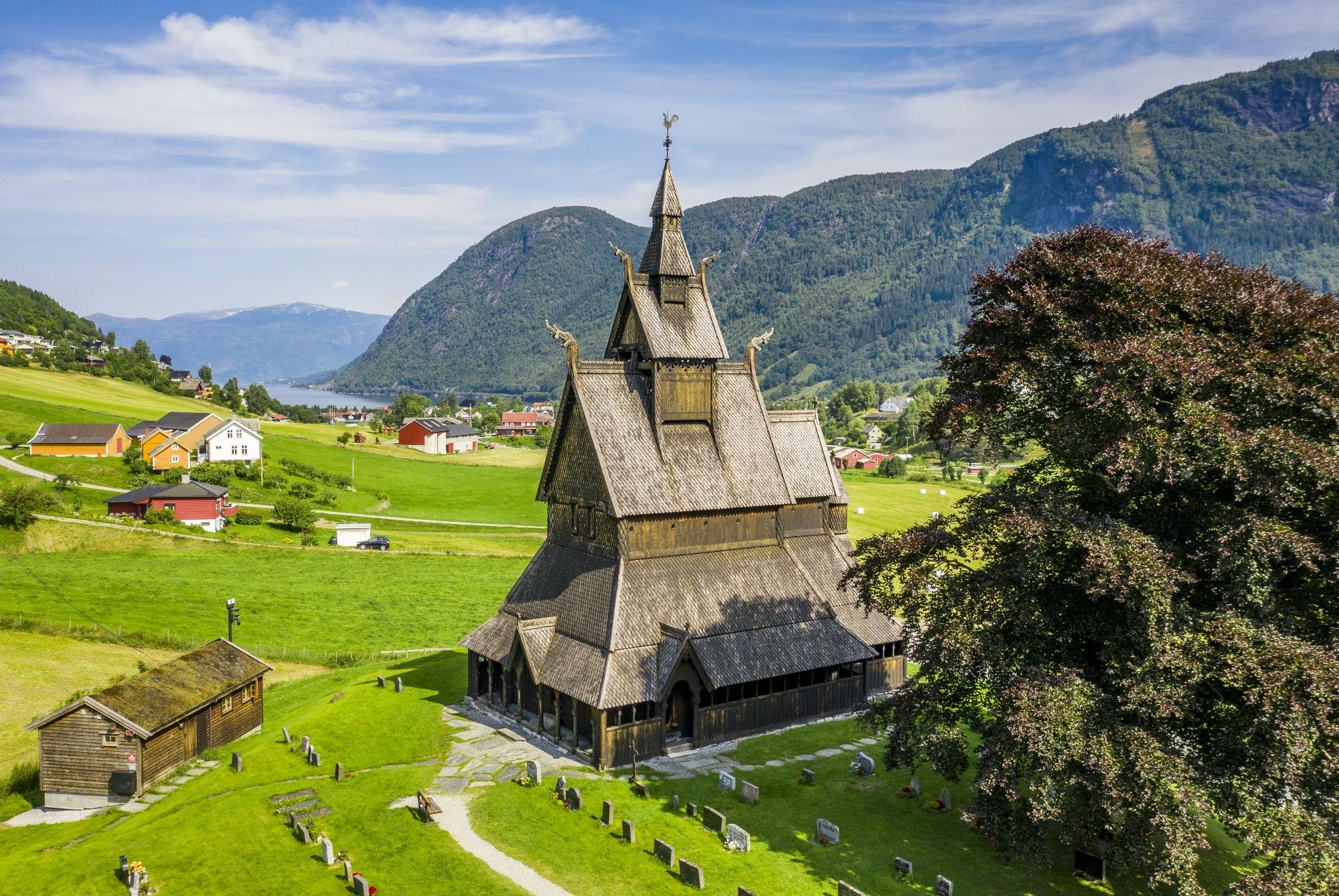
Les églises en bois debout norvégiennes sont les plus anciennes de la chrétienté. La plupart d’entre elles étaient en fait plutôt sobres, tandis que certaines présentaient des plans élaborés et des sculptures intriquées.


Les églises en bois debout norvégiennes
Un témoignage de presque 9 siècles, gravé dans le bois.
Il n’est pas étonnant que ces églises mythiques continuent de fasciner.
Imaginez le temps qu'il a fallu pour sculpter des motifs aussi intriqués.
En entrant, sentez cette odeur de bois goudronné, essayez de distinguer les figures de divinités ancestrales nordiques, qui côtoient souvent le dieu chrétien dans les églises les plus anciennes.
La Norvège a un jour compté plus de 1 300 de ces petites merveilles. Elles ont tristement disparu, l'une après l’autre, remplacées par des édifices plus grands, plus chauds, plus modernes.
Ce fut l’intervention d'un artiste passionné qui permit de sauver in extremis les 28 dernières d’entre elles.
Héritage viking
Au Moyen Âge, d’immenses cathédrales de pierre ont été édifiées dans de nombreuses villes d’Europe. En Norvège, on a employé une technique similaire, quoique à bien plus petite échelle, en utilisant du bois.
Les portes et faîteaux des églises étaient superbement sculptés. On pouvait y déceler des mélanges de motifs insolites, entremêlant des thèmes chrétiens et des figures d’animaux et dragons probablement inspirés de mythes vikings préchrétiens.
Les techniques de construction et sculpture sur bois, dans lesquelles excellaient les Vikings pour construire bateaux et maisons, ont encore été peaufinées pour les églises en bois debout.
Ces dernières se répartissent en plusieurs catégories, mais elles ont toutes en commun les poteaux d'angles (« stav ») et une ossature bois, avec des planches reposant sur des sablières. Les poteaux ont donné leur nom à ce type d'édifice, appelé stavkirke ou église en bois debout.
On a de bonnes raisons de croire que de nombreuses églises en bois debout ont été bâties sur des terres sacrées. Dans les temps anciens, la religion nordique ne possédait pas de lieux de culte attitrés, mais était célébrée en plein air, dans des bois sacrés où l’on dressait un autel ou dans un lieu laïc appelé hov. Il s'agissait souvent d'une grande pièce dans la ferme la plus riche du village.
Emplacements des églises en bois debout
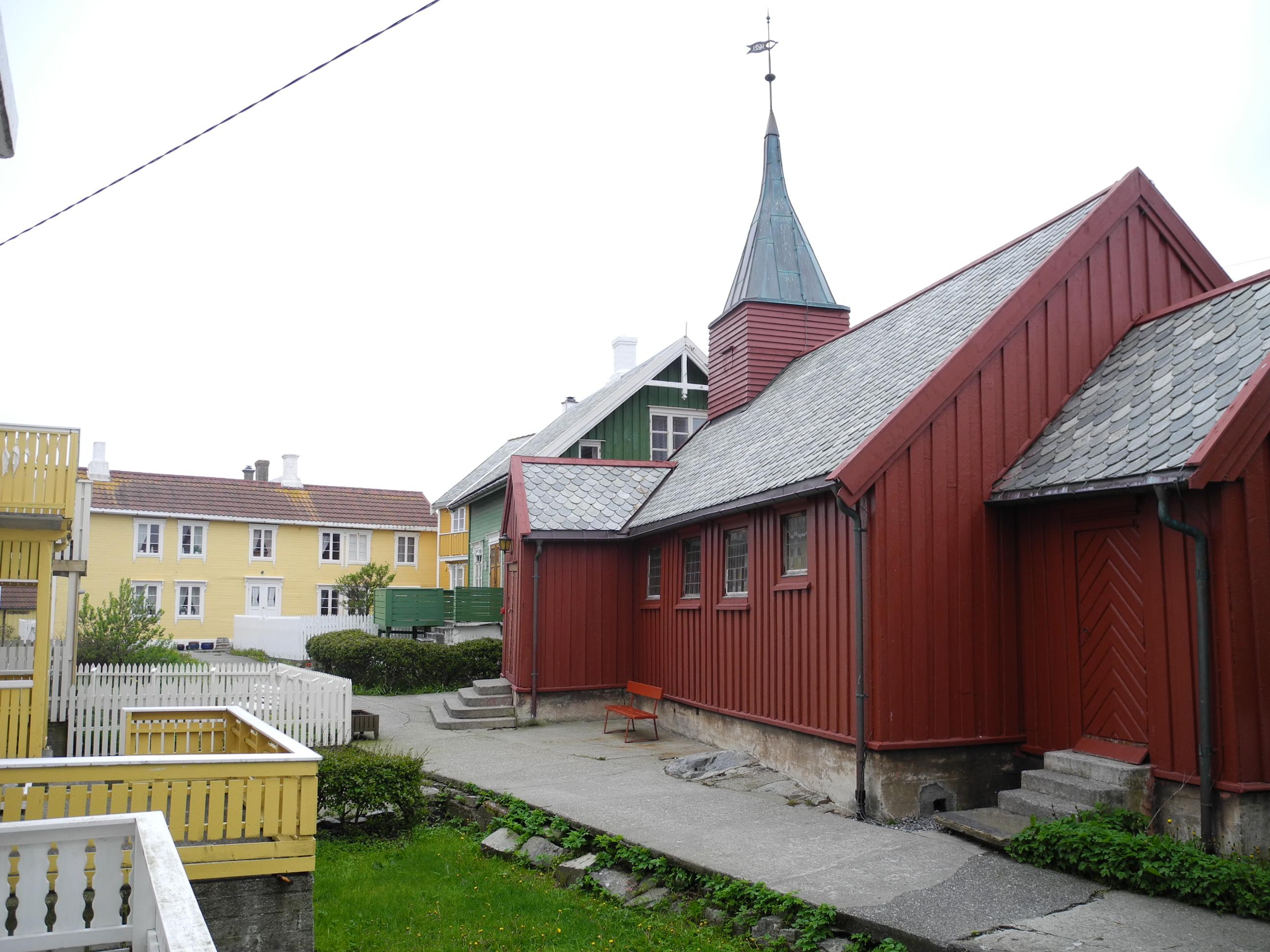
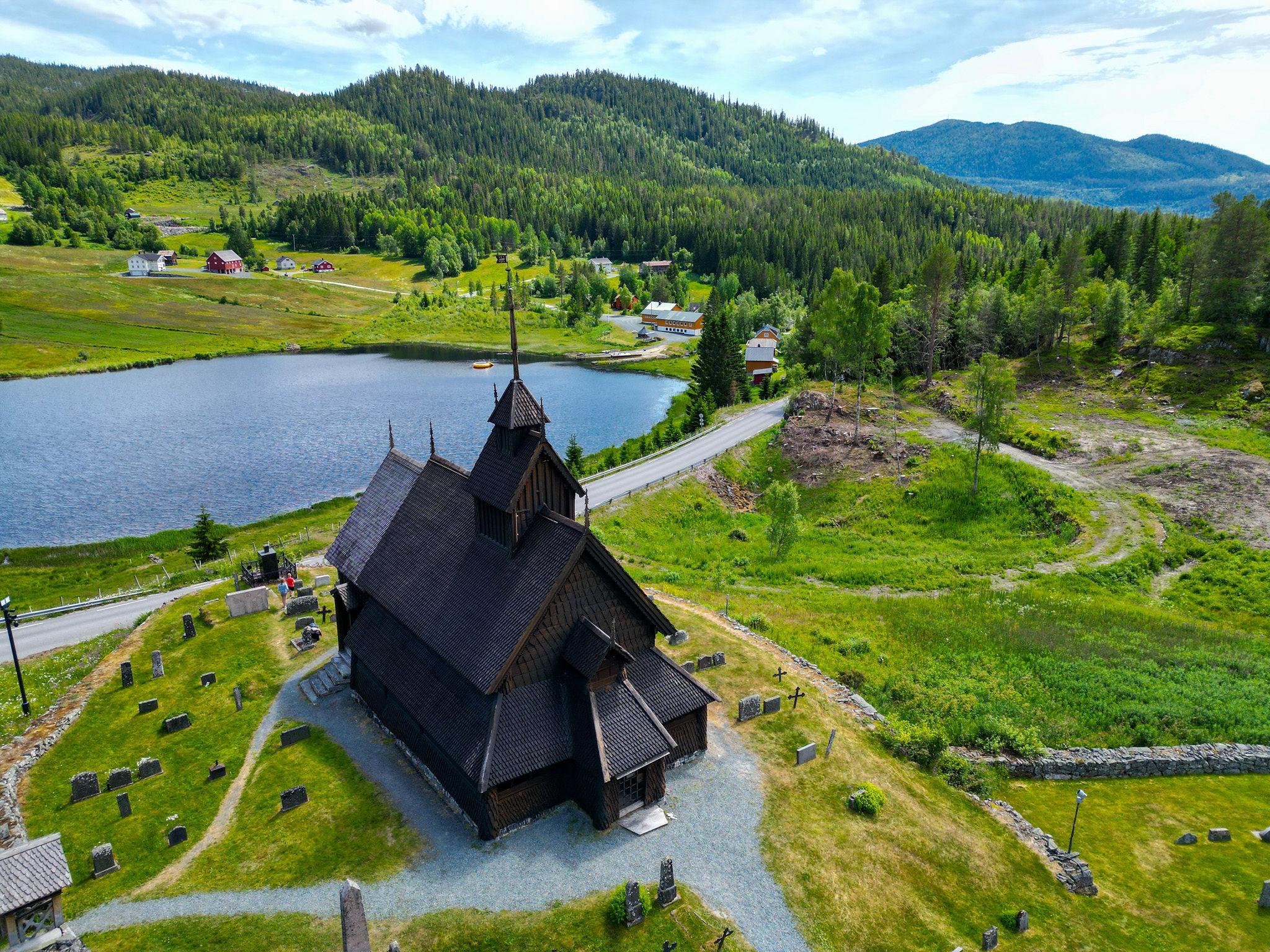
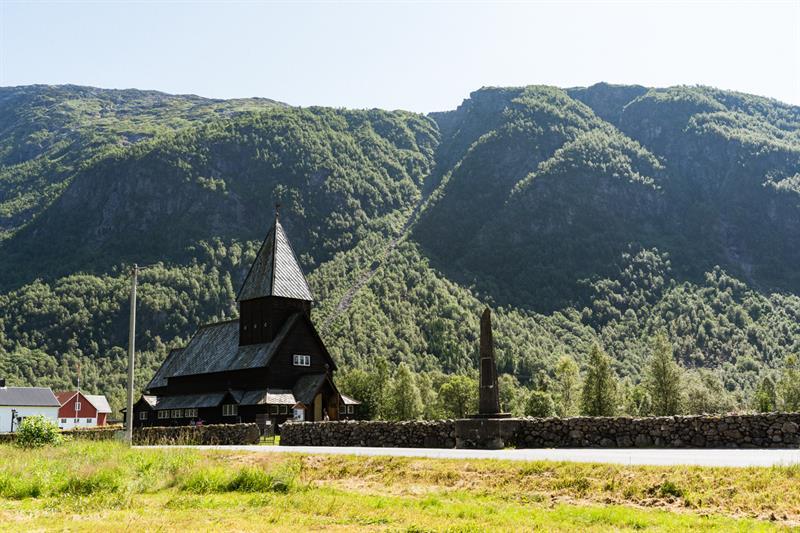
On ne recense aujourd'hui plus que 28 églises en bois debout dans toute la Norvège, petites et grandes, plus ou moins préservées.
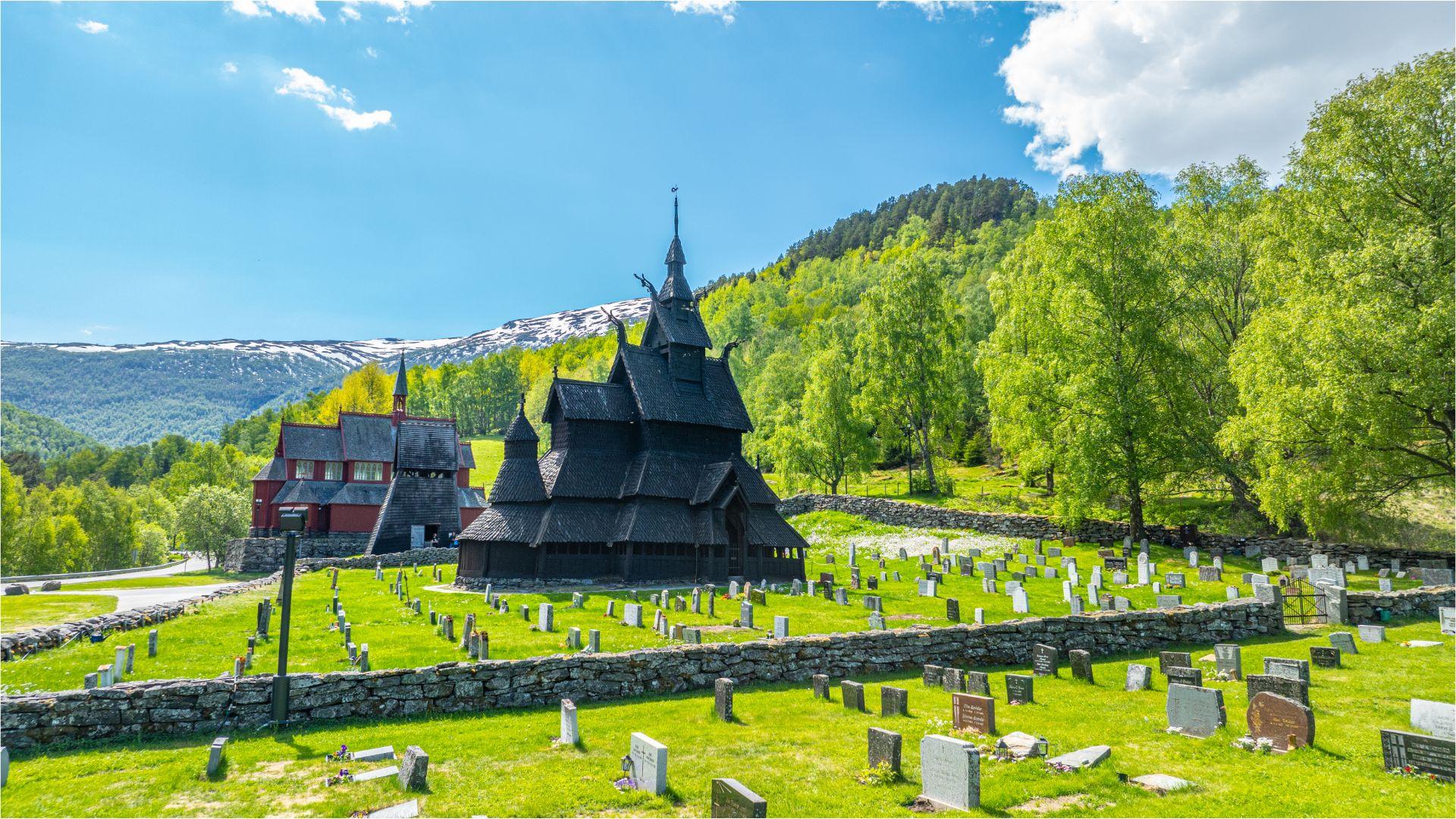
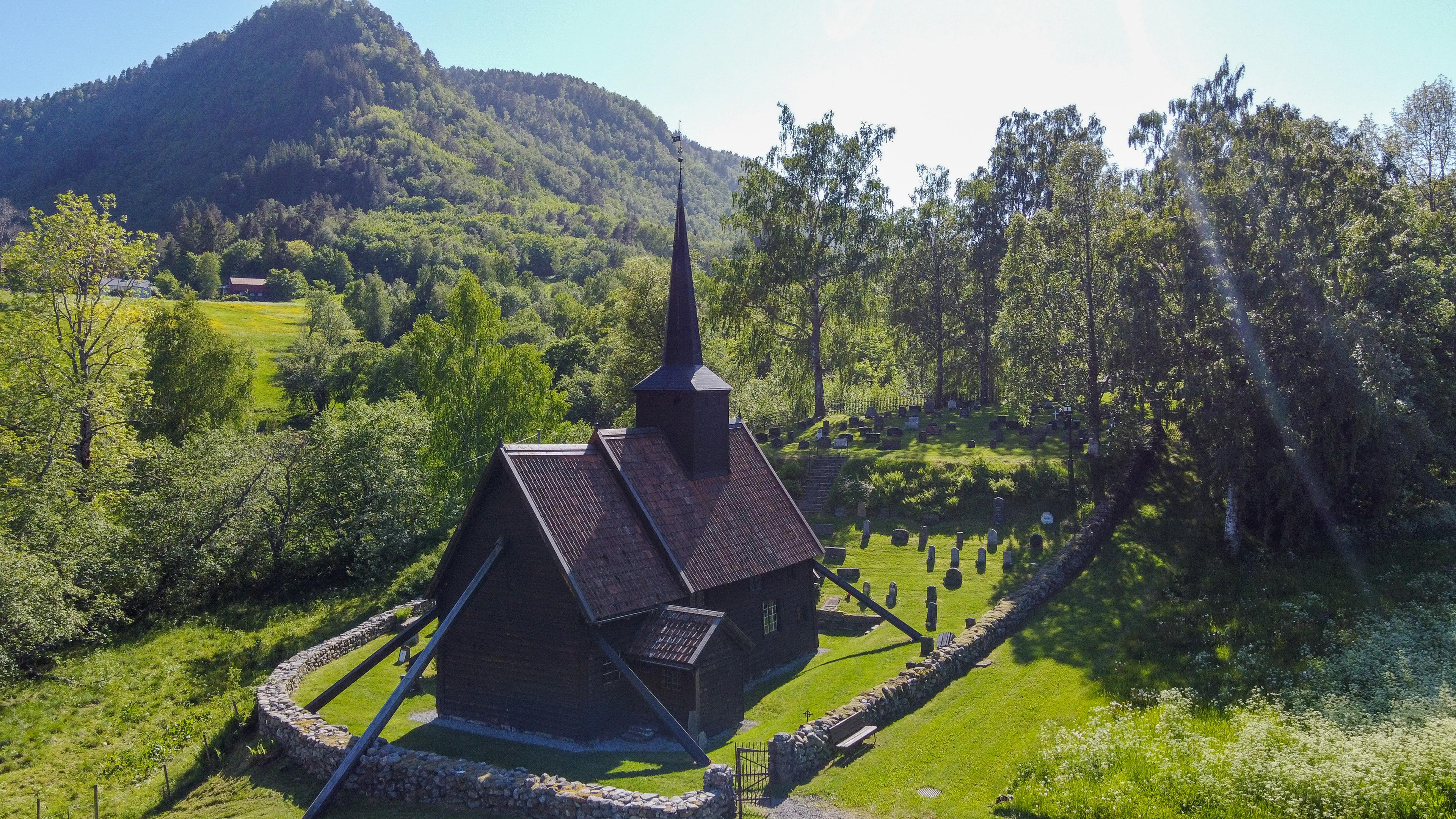
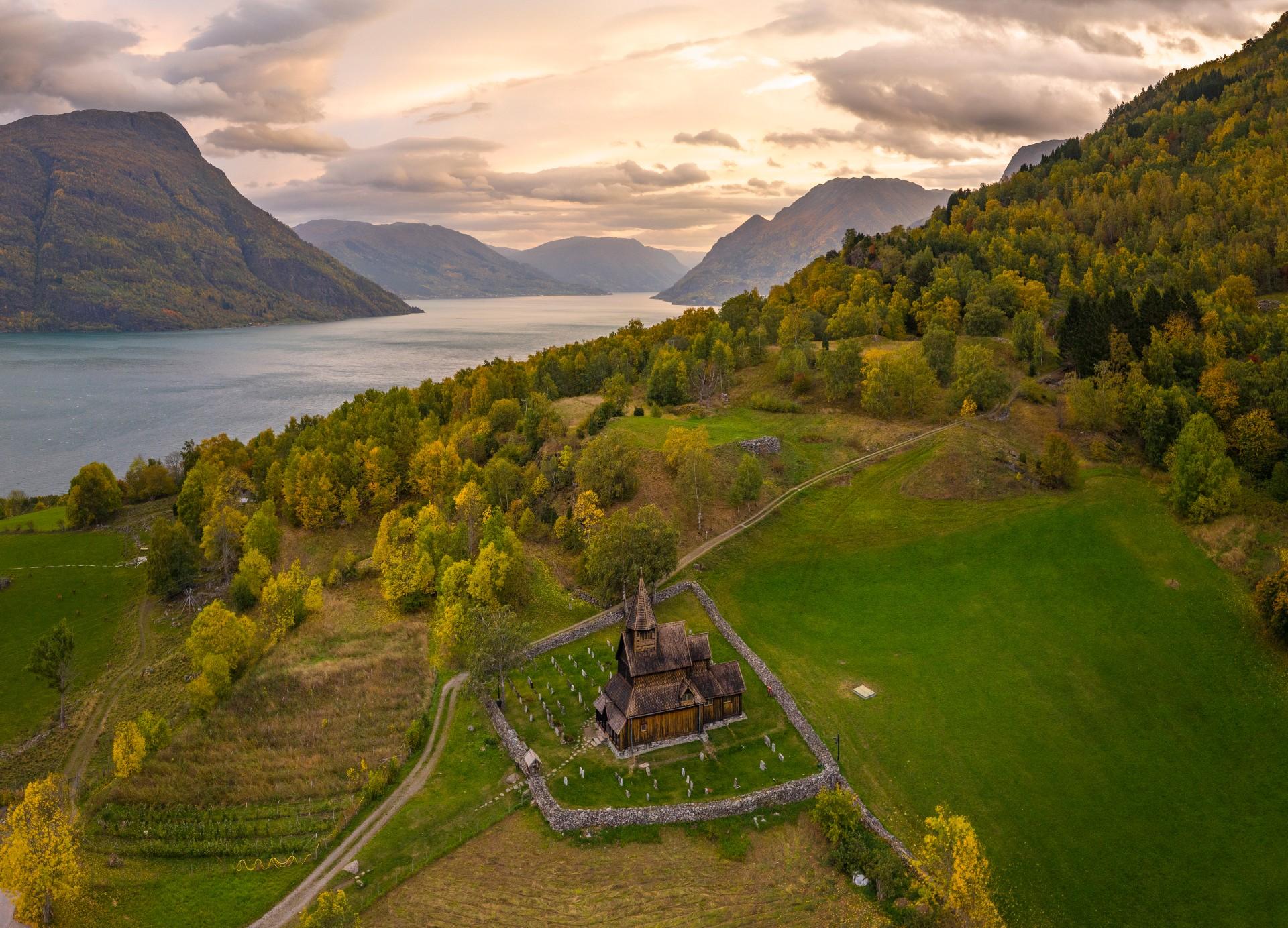
L'édifice le mieux préservé est la stavkirke de Borgund, à Lærdal en Norvège des Fjords. On peut également voir de beaux exemples d'églises en bois debout à Heddal dans le Telemark, l'église reconstituée de Fantoft à Bergen, ainsi que celle d’Urnes, à Luster, classée au patrimoine mondial de l’UNESCO.
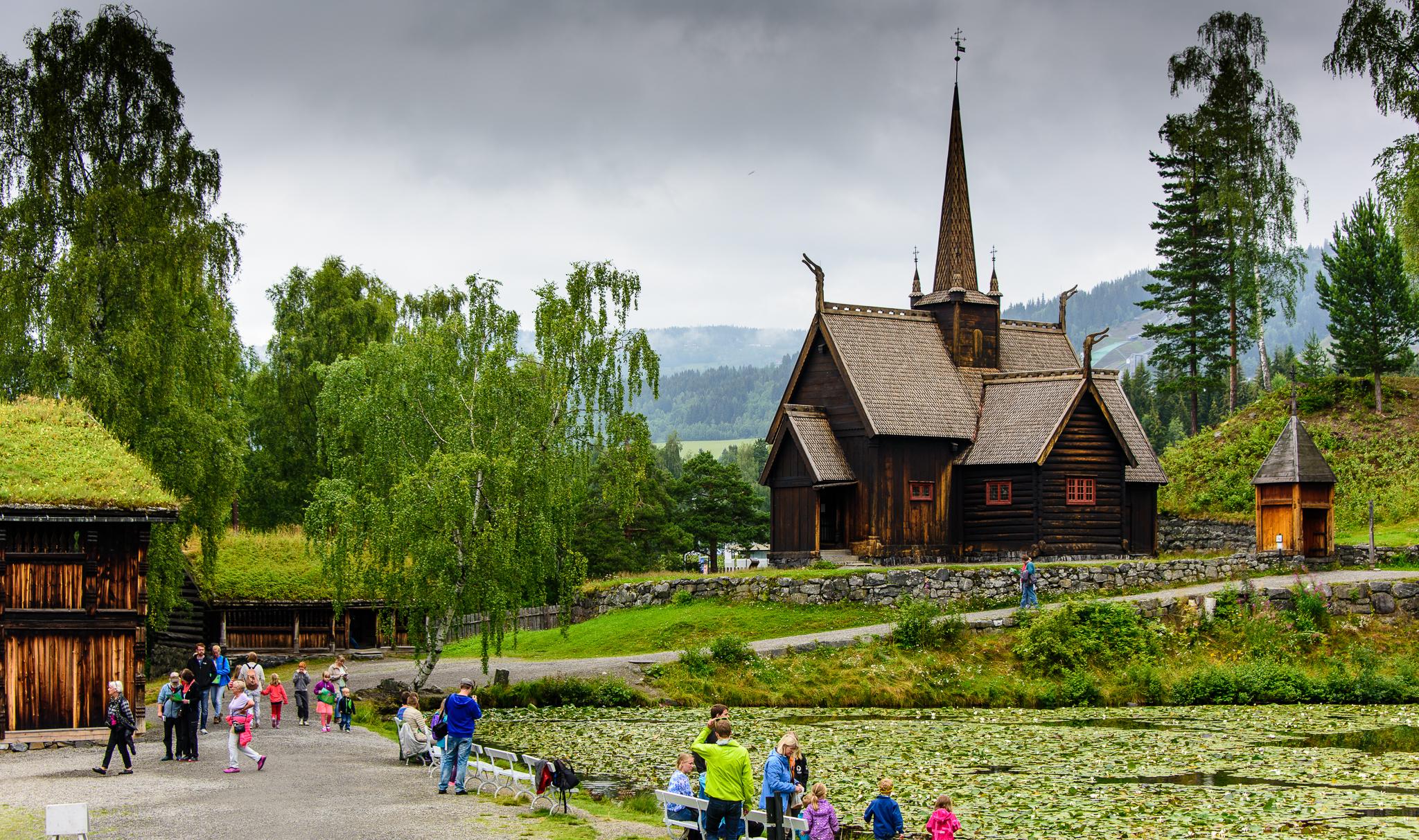
L'église de Gol a été déplacée au musée norvégien des arts populaires (Norsk Folkemuseum) de Bygdøy à Oslo, où elle a fait l’objet d’une restauration restituant sa forme originelle présumée. Le musée en plein air Maihaugen de Lillehammer abrite également une petite église en bois debout, qui se trouvait à l’origine à Garmo.
D'autres églises ont été déplacées au fil des ans.
La disparition des églises en bois debout
Les églises en bois debout n'ont pas toujours été aussi appréciées qu’aujourd’hui. Au début du XIXe siècle, la plupart d’entre elles avaient disparu. En 1851, une loi est entrée en vigueur, stipulant que toute église devait pouvoir accueillir 30 % de la population locale. Sous la forte pression démographique, bon nombre des églises en bois debout devenaient trop petites. De nouvelles églises, plus chaudes, plus lumineuses ont été construites et sont vite devenues plus populaires que les églises en bois debout, froides et sombres.
En conséquence, un grand nombre de ces dernières a été démoli entre 1851 et 1890. Souvent, les énormes pièces de bois étaient réutilisées dans d'autres constructions. Fort heureusement, la valeur de ces vieilles bâtisses n’a pas échappé à tout le monde...
Le sauveur de l’église de Vang
L’une des églises sauvées est la superbe église de Vang, aujourd'hui l’église en bois debout la plus visitée du monde. Pourtant, par un tour ironique de l’histoire, elle ne se trouve pas en Norvège, mais en Pologne.
Le héros de cette histoire s'appelle Johan Christian Clausen Dahl. Peintre installé à Bergen, il a été le premier professeur norvégien d'histoire de l’art. Il a également été l’instigateur de la Fortidsminneforening (Société de conservation des monuments historiques), qui a été déterminante dans la préservation des dernières églises en bois debout. Johan Christian Clausen Dahl a écrit un article sur le caractère exceptionnel des églises en bois debout, leur origine et leur « aspect éperdument fantastique », qui a joué un grand rôle dans leur sauvegarde. Il a également sensibilisé un vaste public d’historiens de l’art, en Europe, à l’histoire de ces édifices uniques.
Dahl a fini par acheter l'église de Vang lors d'une vente aux enchères et est parvenu à convaincre le roi de Prusse de la réinstaller à Berlin. Elle a été démontée pièce par pièce, transportée à dos de cheval, en luge et en bateau. Un an plus tard, le roi a ordonné que l'église soit reconstruite en Pologne, en Basse-Silésie, dans une ville aujourd’hui dénommée Karpacz.
Bien que l’église n'appartienne plus tout à fait au patrimoine norvégien, une chose est sûre : sans l’intervention de Dahl, elle n’existerait plus aujourd’hui.
Construire une nouvelle église en bois debout
À Rysstad, dans la vallée de Setesdal, la communauté locale redonne vie au patrimoine architectural en bois emblématique de la Norvège en construisant une église en bois traditionnelle, réalisée selon les techniques vikings ancestrales. Son achèvement est prévu pour 2030.

Ouvertes au public
Aujourd'hui, 28 églises en bois debout se dressent sur le sol norvégien. Comme vous pouvez le constater sur la carte ci-dessous, la majorité d’entre elles se concentrent à l’intérieur du pays, en Norvège de l'Est et en Norvège des Fjords.
La plupart d’entre elles sont ouvertes au public en été, et certaines accueillent les visiteurs toute l’année.
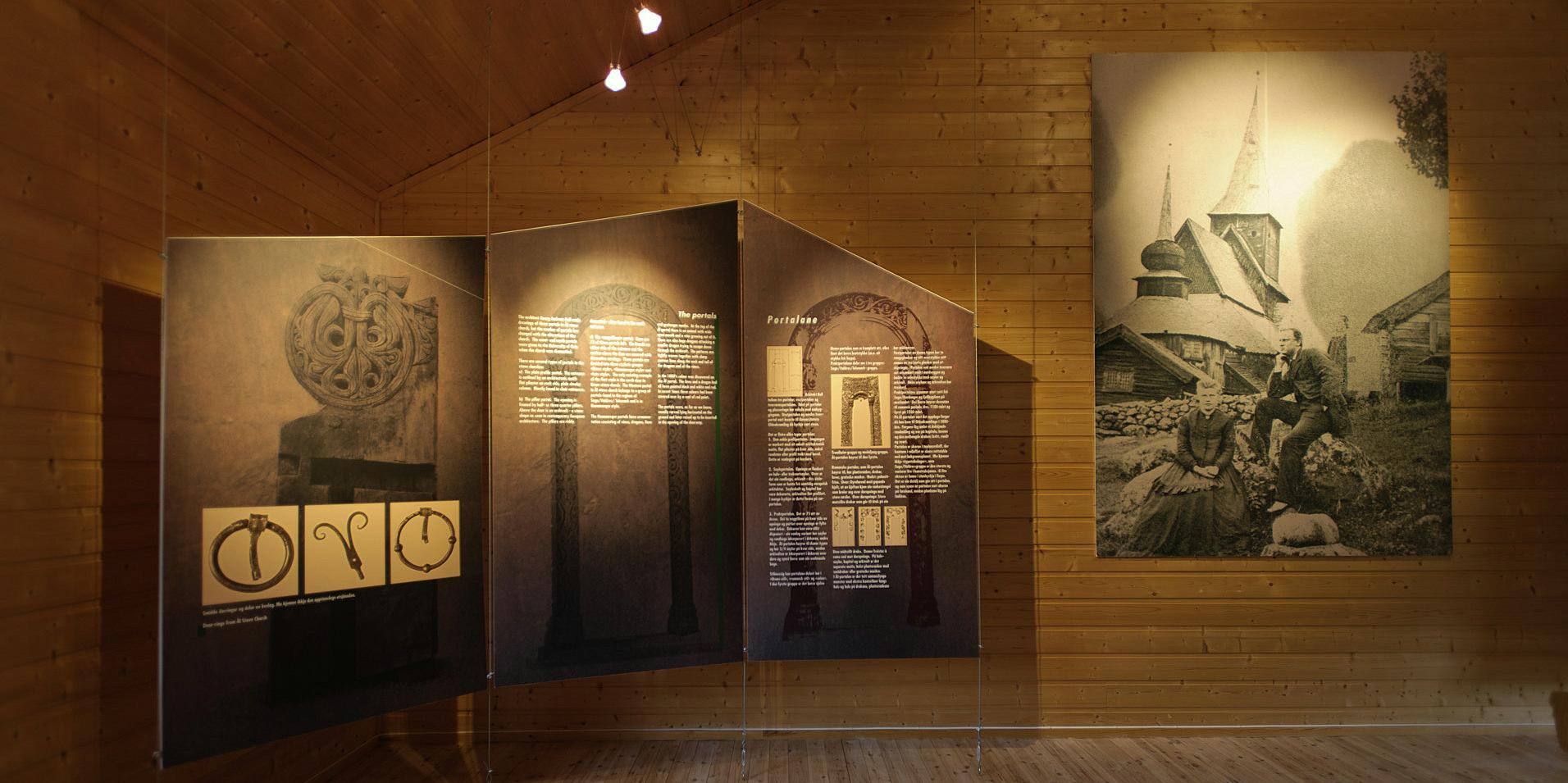 Ål
ÅlÅl Stave Church Museum
The Ål Stave Church dated from the latter part of the 12th century was richly decorated at the time of its demolition in 1880. The main doorway and the ceiling painting can be seen at the medieval exhibition at the Historical Museum in Oslo. Some of the church's fittings as well as a copy of the Ål ceiling can be found in Ål Church. The site of the church was examined and planned, and today it forms part of the church park. In the 1990s, the Ål Stave Church Museum in Prestegardslåven in the church park opened. The museum restores and displays decorative panels from stave churches and it has a copy of the Ål doorway. The exhibition provides information about Ål Stave Cchurch and about Norway’s other stave churches in Norway. Free admission for children up to the age of 16, when accompanied by an adult.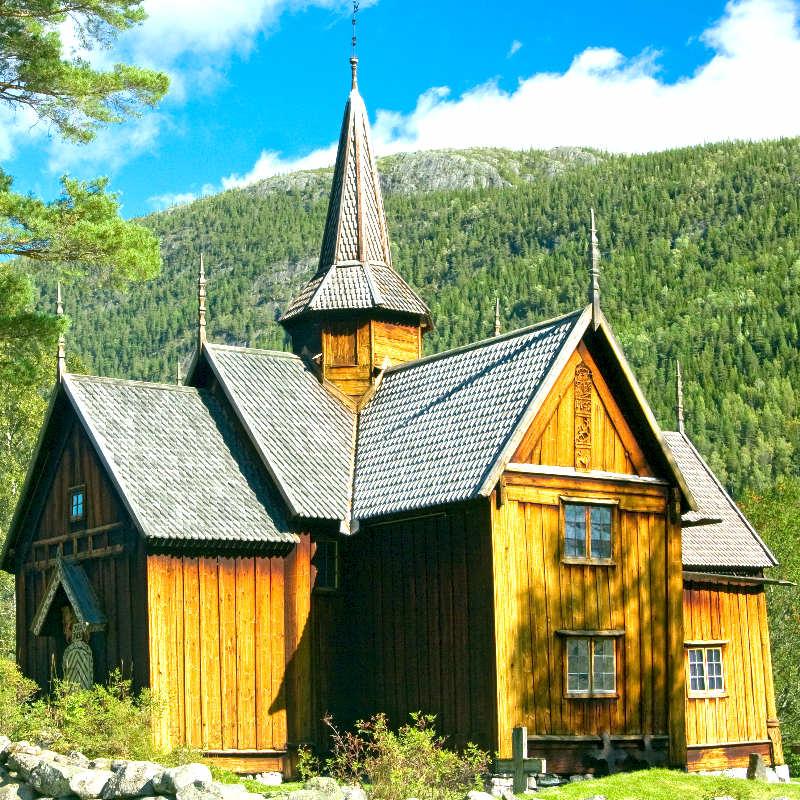 Nore
NoreNore Stavkirke
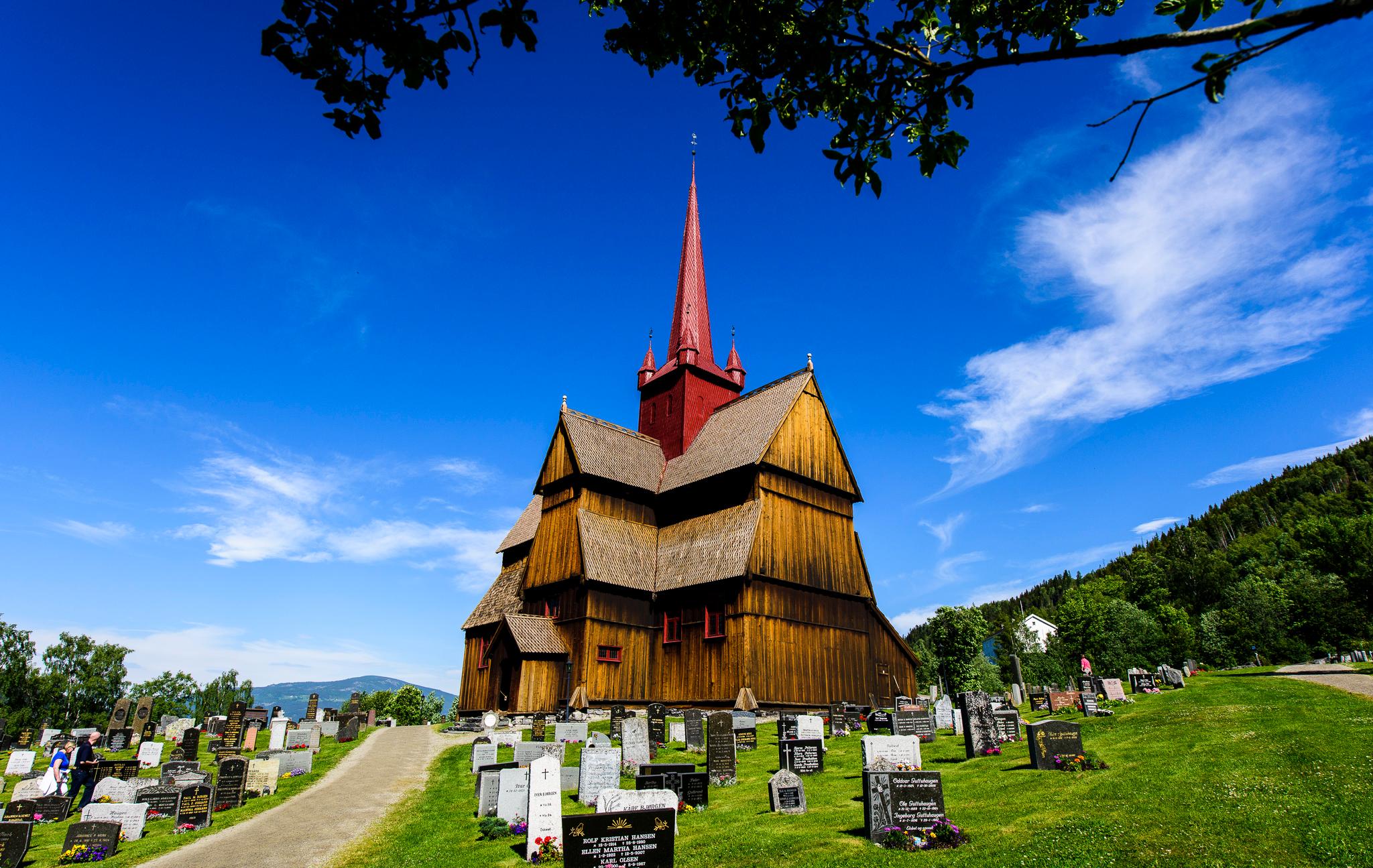
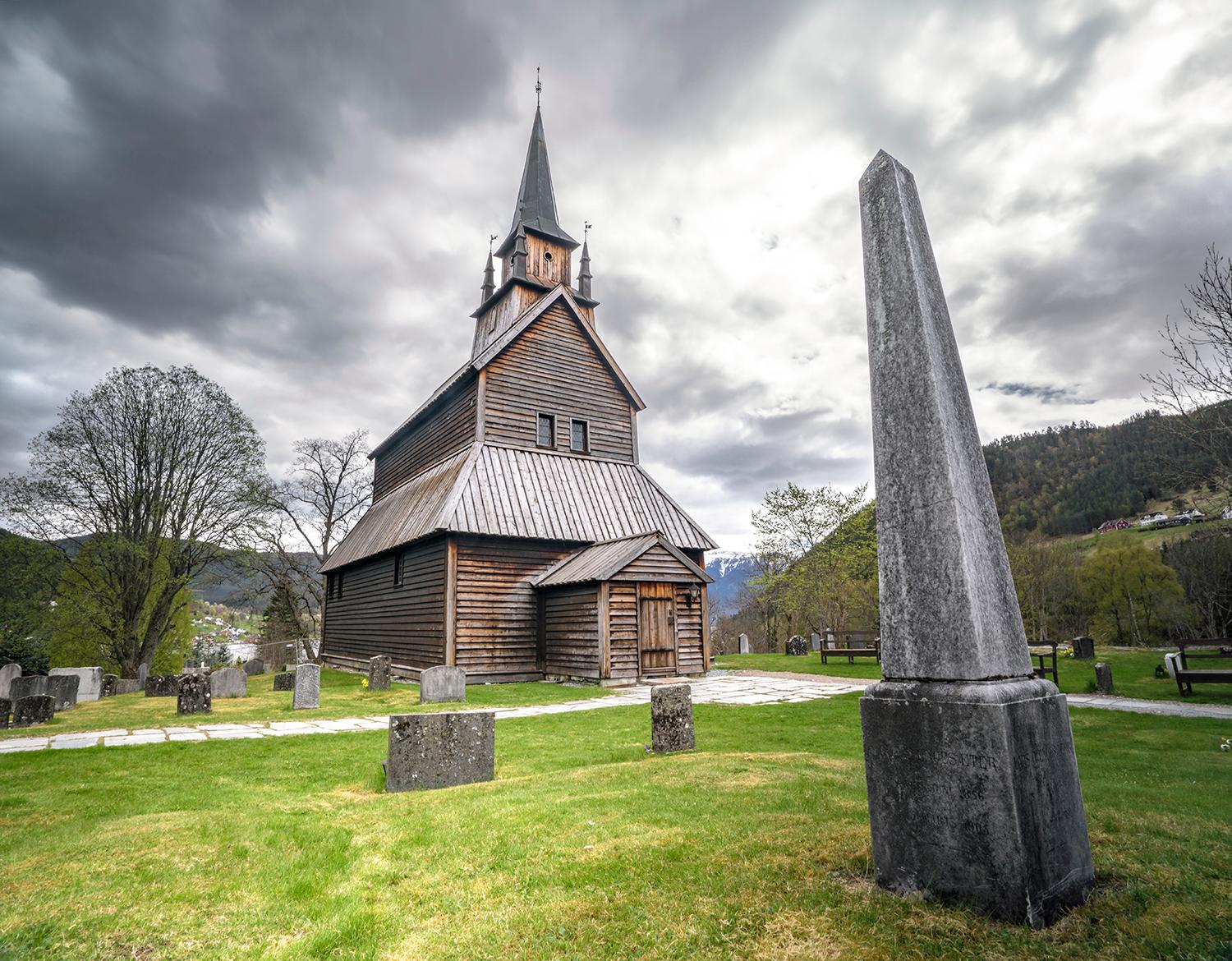
Nore Stave Church Nore Stave Church is located in Nore and Uvdal municipality in Buskerud. Nore Stave Church was built according to an architectural style called: Numedalstype. The church was built as a cruciform church approximately 1167, with galleries, a chancel and cross naves with an apse. This was very rare at the time, and one does not know of of any other church in Norway or Europe that could have been a model for this structure. The church was partially rebuilt in the 1600s and 1700s. The naves and chancel have remnants of beautiful coloring from 1655 and 1683. As in Uvdal Stave Church the woodcarvings in Nore are very artfully done. The nave's west portal has carved decorations with leaf vines and animal ornamentation. The animal figures are dragons and lions, and the portals are related to similar portals in Telemark. In the Stave Church are also two inscriptions, one of which is a prayer: "Wish me the very best". The two crucifixes may be from the Middle Ages, and during the excavation revealed a piece of painting that seemed to originate from the late Middle Ages. The Church seems to have been richly endowed with art objects. The Christian symbols probably spoke more directly to the medieval population than they do to people of today. Art objects and decoration of the stave churches in Nore and Uvdal confirms the impression we have from other stave churches, that the first half of the Middle Ages was the most creative period.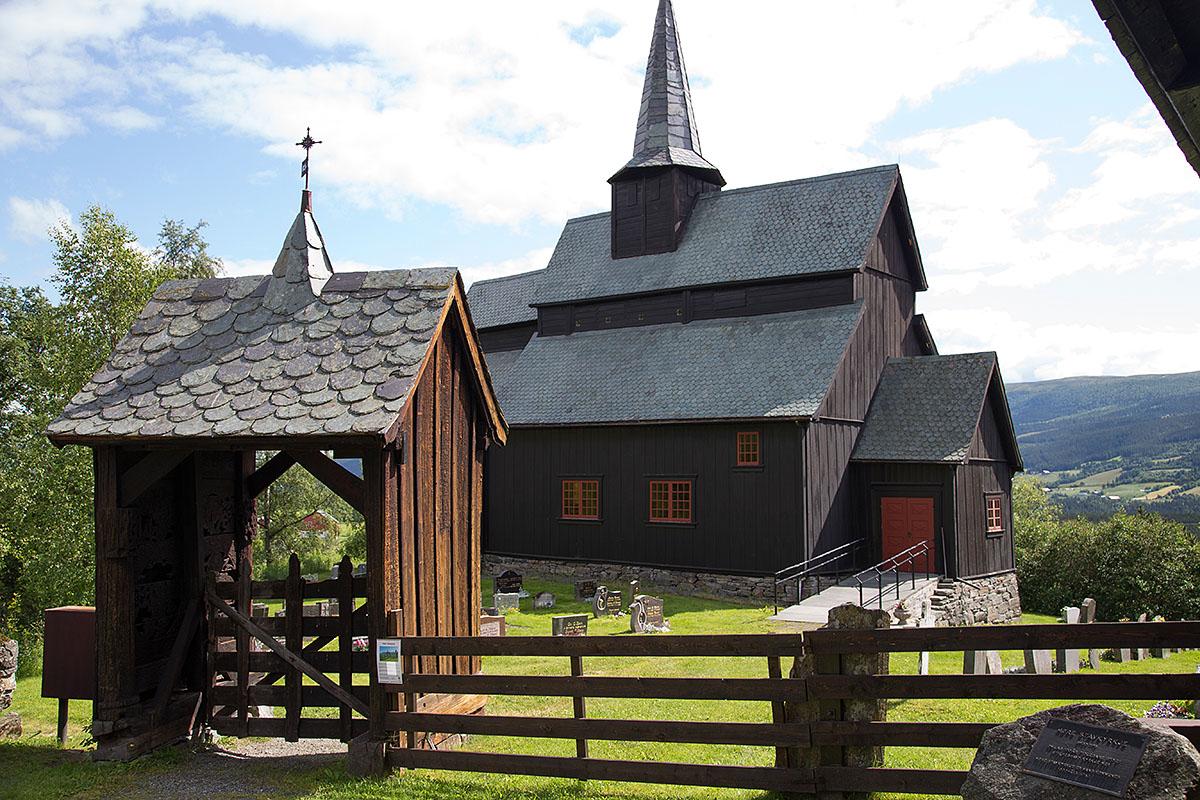 Ryfoss
Høre Stave Church
Høre Stave Church is rich in dragon and lion carvings from the Middle Ages, and among these are two beautiful portals. What used to be the ridge turret is today the entrance of the graveyard. An unusual runic inscription shows that Høre Stave Church dates back to around 1179. However, as the oldest coin found under the church floor is from around 1100, it is presumed to have replaced a previous, smaller sized church. An extension was built in 1822, and today still, Høre Stave Church serves the community as a regular parish church. The story behind the runic inscriptions found in the pulpit is exciting. According to legend, King Sverre passed through Valdres in 1177 when he fled before Magnus Erlingsson. Elling, the feudal overlord of Kvie, had joined King Sverre in his fight against King Magnus and his father the Earl Erling Skakke. When Erling Skakke fell in the battle at Kalvskinnet in Nidaros (Trondheim), Elling and his brother Audun decided to build Høre Stave Church as the runic inscriptions show: "In the summer of which the brothers Elling and Audun cut (timber) to this church, Erling (fell) in Nidaros." Admission (incl. guiding): Adults NOK 80,- Children 6-16 years NOK 50,- Family NOK 170,- Groups NOK 60,- per person (minimum 10 people) No student or senior discounts. Visits out of hours on request, minimum charge NOK 500,- Please note that we cannot accept foreign currencies, i.e. Euro.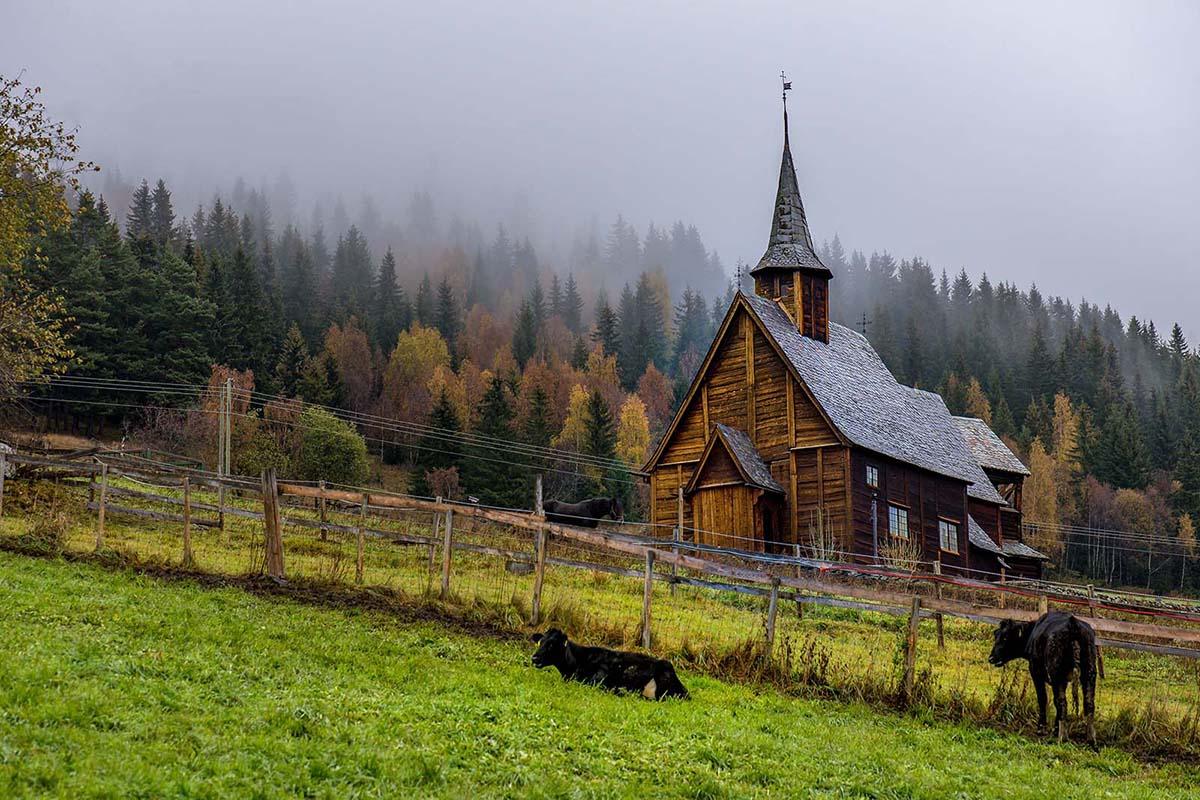 Lomen
LomenLomen Stave Church
Lomen Stave Church is believed to date back to around 1192. The oldest coin found is from King Sverre`s era 1177-1202. In 1750, the church was converted and extended as it had become too small to meet the needs of an increasing population. When the new Lomen Church was completed in 1914, regular use of the stave church ended. Today, it is only used for weddings and church services during the summer season. Wooden sections dating back to the Middle Ages have been stripped down to the woodwork, but post-reformatory parts are still painted. Several medieval portals featuring wood carvings and animal decorations can be found in the church. Of the soapstone font from the Middle Ages, only the base remains. A mediaeval chest leans towards the wall in the choir. It features a magic runic inscription that has almost been rubbed off. The Madonna-head on the altar is a plaster copy of the beautiful original from the 1200s. It was probably once part of a whole figure. The original can be found at Valdres Folk Museum in Fagernes. Admission (incl. guiding) - payment by cash only: Adults NOK 80,- Children 6-16 years NOK 50,- Family NOK 200,- Seniors NOK 70,- Groups NOK 60,- per person (minimum 10 people) No student discount. Visits out of hours on request, minimum charge NOK 500,- Please note that we cannot accept foreign currencies, i.e. Euro.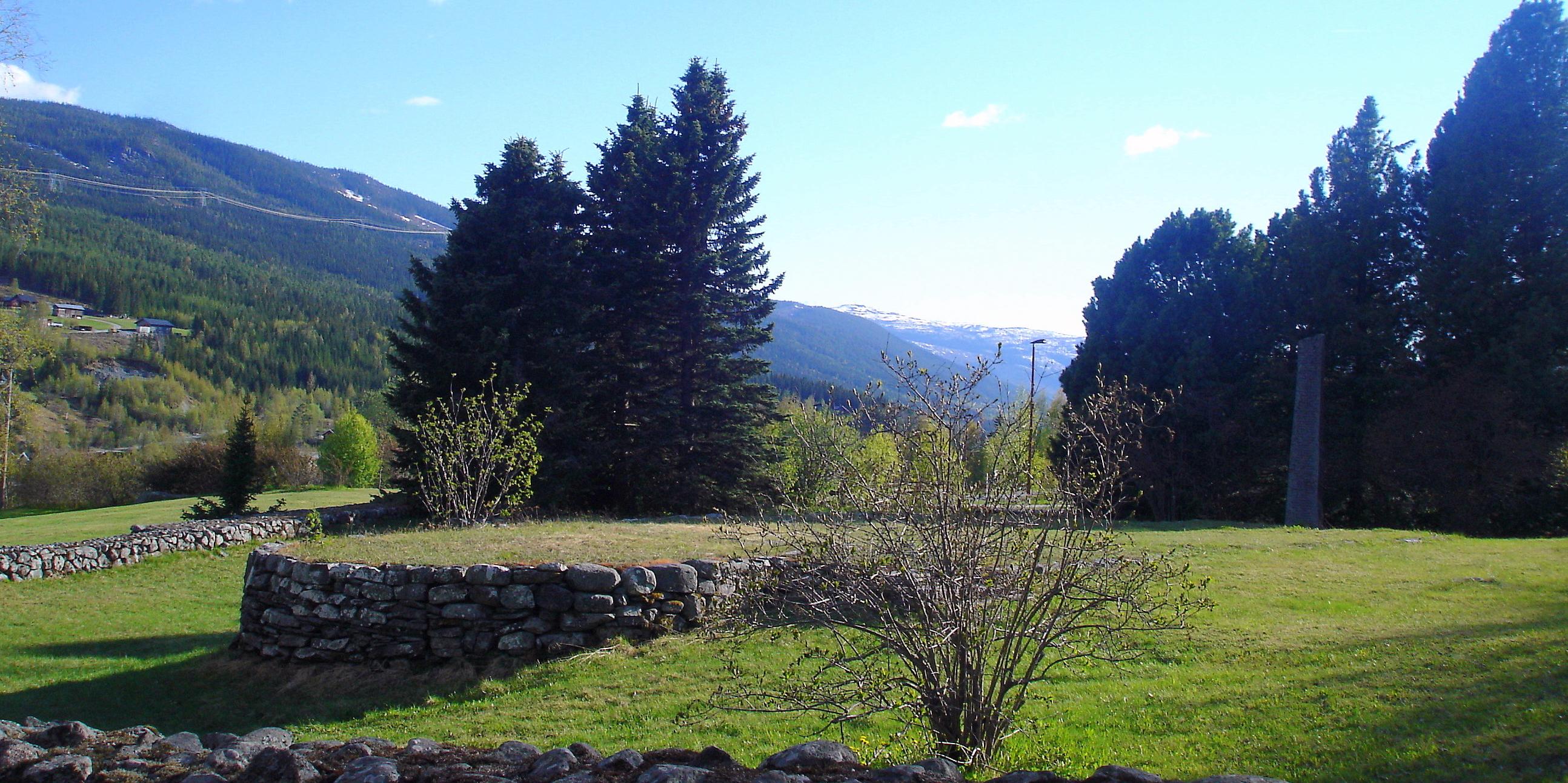 Ål
ÅlThe old Ål Stave Church site
Ål Stave church was erected around 1170 and demolished in 1880. The stave churches are a wooden building with a carrying construction of poles. The stave churches are today counted as among the most important European architecture in wood from medieval times. The stave church in Ål with its 18 poles was the largest church in Hallingdal. The church also changed appearance several times with expansions and reconstructions. In Ål Stave church they also found an ancient runic inscription that showed who was the constructor of the church. This site is located in the centre of Ål, parking spot by the schools.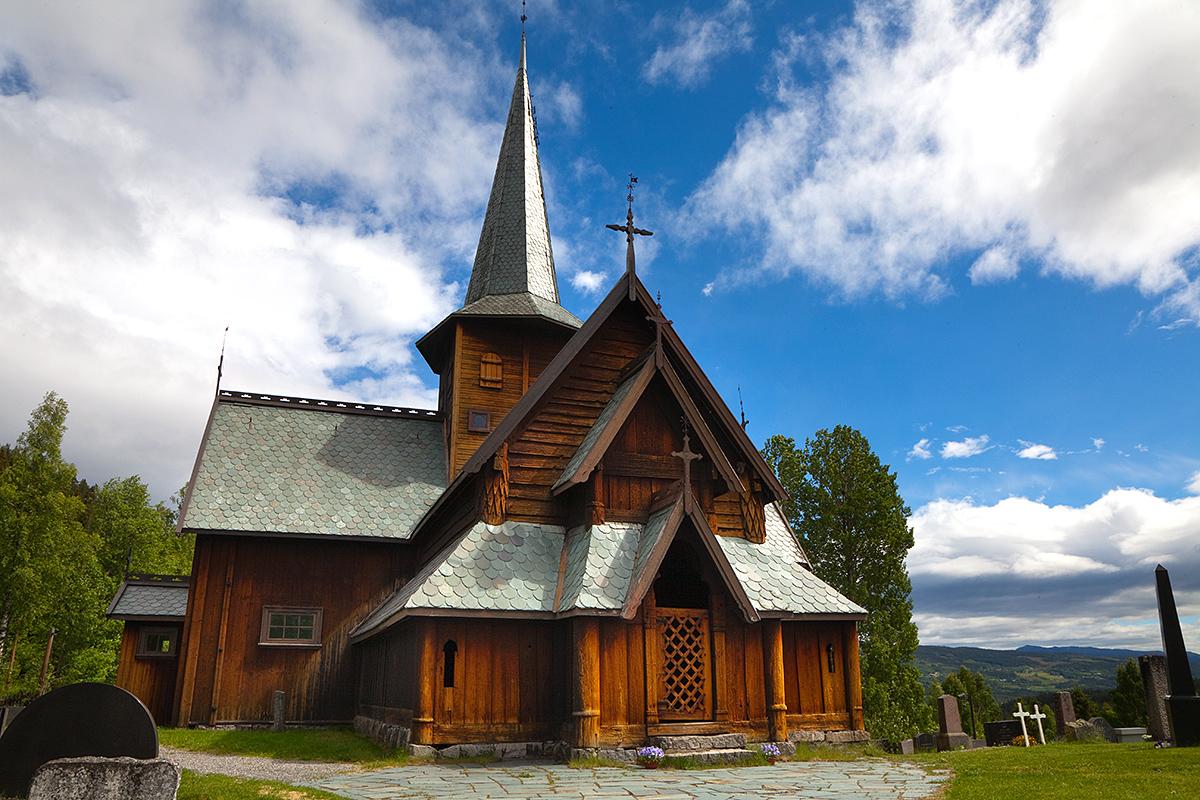 Hedalen
Hedalen Stave Church
The Hedalen Stave Church may be the oldest of its kind in Valdres today. It comprises an unusual amount of catholic items and among these a reliquary. Only a few of these can still be found in Norway. The church dates back to around 1163, and coins from King Sverre's era 1177-1202 have been found under the floor. It is in use as a regular parish church. The west-facing portal features dragon and vine decorations from the late 1100s. These dragons symbolise the evil forces you leave behind before you enter the place of worship. The reliquary is the most treasured item in the church. It is made out of copper-gilded wood, and dates back to around 1250. The figures featured are Christ, St. Mary, St John, St. Jacob, St. Thomas, St. Olav and St. Peter. Norway has only a few such reliquaries left. Its original reliquary casket is still intact, and is the only one of its kind. The Hedal Madonna (sculpture of St. Mary), dating back to the mid-1200s, is one of the most stunning pieces of medieval ecclesiastical art in Norway. Originaly, the sacrament house was part of the triptych. Changes to this gothic triptych were probably made in 1699, and it was painted in 1769. Its crucifix dates back to around 1260-1280. The Romansque font is made out of soapstone, and has a cover dating back to 1250. In the sacristy, a bearskin is hanging on the wall. According to legend, there was no one left in Hedalen after the Black Death. A hunter found the church in the woods and shot a bear in front of the altar. But there were still people living in Hedalen, and maybe the bearskin was just the vicar's somewhat unusual rug in front of the altar. Admission (incl. guiding) Adults NOK 90,- Children 6-16 years NOK 50,- Family NOK 250,- Groups NOK 70,- per person (minimum 10 people) No student or senior discounts. Visits out of hours on request, minimum charge NOK 500,- Please note that we cannot accept foreign currencies, i.e. Euro.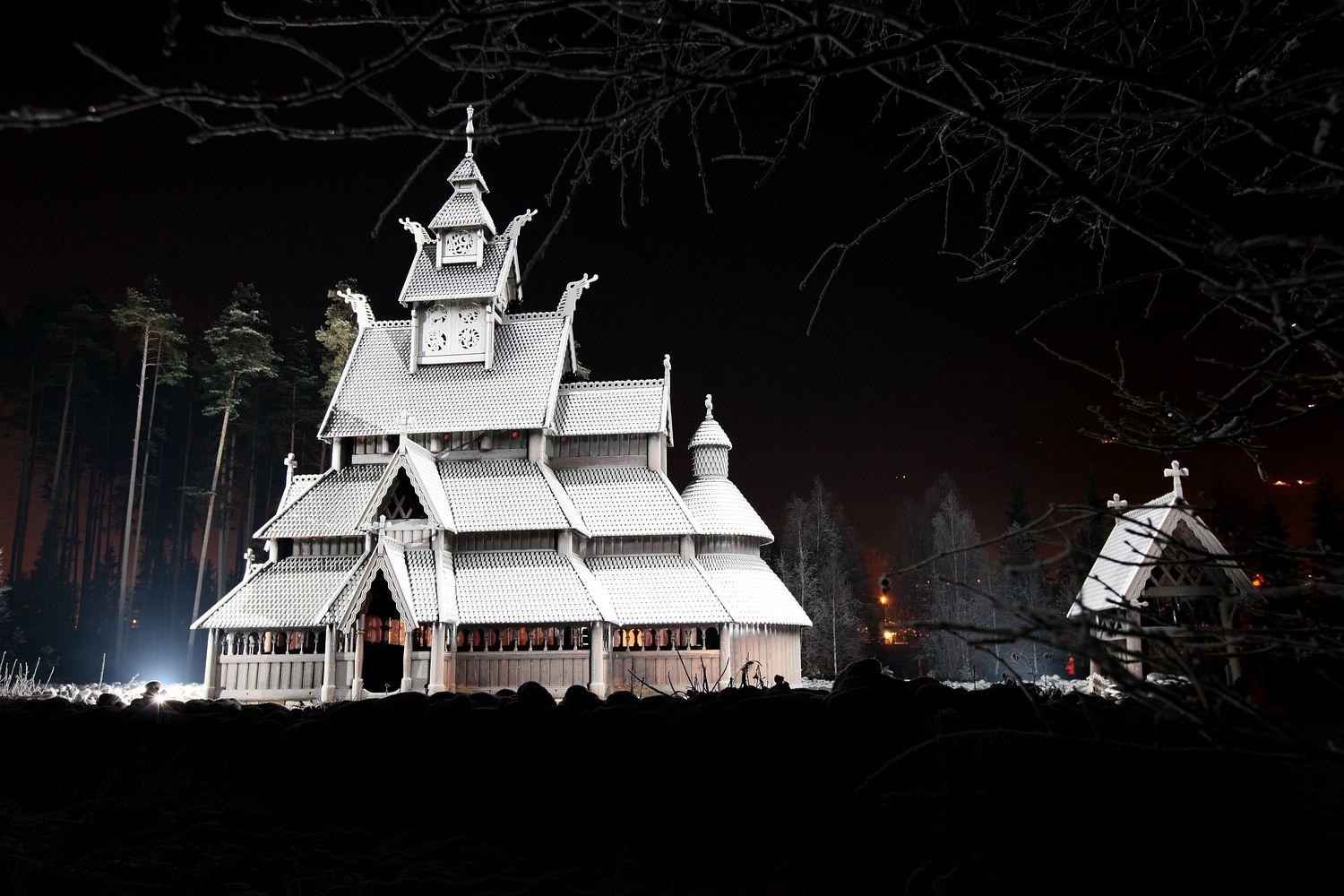 Gol
GolGol Stave Church
It is estimated that around 2000 stave churches were built between 1150 and 1350. This had to be an enormous achievement in sparsely populated Norway, meaning an average of 10 stave churches were erected each year. The accomplishment is no less impressive, considering all construction was done manually, using axes as the primary tool. This was when Norway had just been converted to Christianity, and the true faith had not yet been fully embraced. It's interesting to observe some Norse symbols used in the churches, such as Thor's hammer above the entrance, dragons on the roof, Odin, Thor, and others standing and supporting the church roof (the masts). Why these symbols found their way into a Christian church remains unknown. History suggests that Norwegians were uncertain about the new faith and wanted to keep "one foot" in Norse beliefs just to be safe. It is assumed that craftsman guilds led the construction of stave churches. When studying the construction, many aspects resemble boat building, which is precisely where these craftsmen gained expertise through centuries of constructing Viking ships and other boats. Hence, they possessed the skills to create some of the finest examples of wooden architecture. Garðar kirkja The original Gol stave church was moved to the Norwegian Folk Museum on Bygdøy in Oslo, belonging to the reigning monarch of Norway. Studies indicate that the church was built after 1216, with elements dating as early as 1157. The old stave church site is in the hamlet where Gol was located at the time, 300 meters southwest of the current Gol church on Leikvollen in Golreppen. The stave church was used until 1881, when Gol got a new one. Gol Stave Church began to deteriorate significantly in the 1800s. The church was also heavily modified due to increased space requirements. In 1882, the church was sold to the "Association for the Preservation of Norwegian Ancient Monuments," it was moved to Bygdøy Kongsgaard, now the Norwegian Folk Museum. The church was restored to its original form and size during the reconstruction at the folk museum, with doubts about the reconstruction, using Borgund Stave Church in Sogn as a model. Borgund Stave Church is considered the sister church to Gol Stave Church, possibly built by the same craftsmen. Gol Stavkyrkje The church on Storeøyne (the island in Gol) replicates the original stave church from the 1200s. The church was completed in 1994 and consecrated on July 10. Gol Stavkyrkje consists of a nave, ambulatory, gallery, choir, and apse. Three spires stand on the main roof. A challenge in copying a stave church today is the absence of the old, coarse pine forests. Suitable materials are hard to find. Behind the copying of Gol Stavkyrkje lies approximately 10 years of work. Local artisans built the church, and the woodcarving and furnishings were done by Hans Slettemeås from Telemark. Most of the timber was sourced from the valley. Textile artist Karin Stang created the textile work on the apse wall. The man behind the project is civil engineer Torbjørn Rustberggard from Gol. Stave Church - Why is it called a stave church? The reason lies in the robust masts (staves) supporting the church. The stave principle involves standing wall panels enclosed by sills above and below, with corner columns at each end.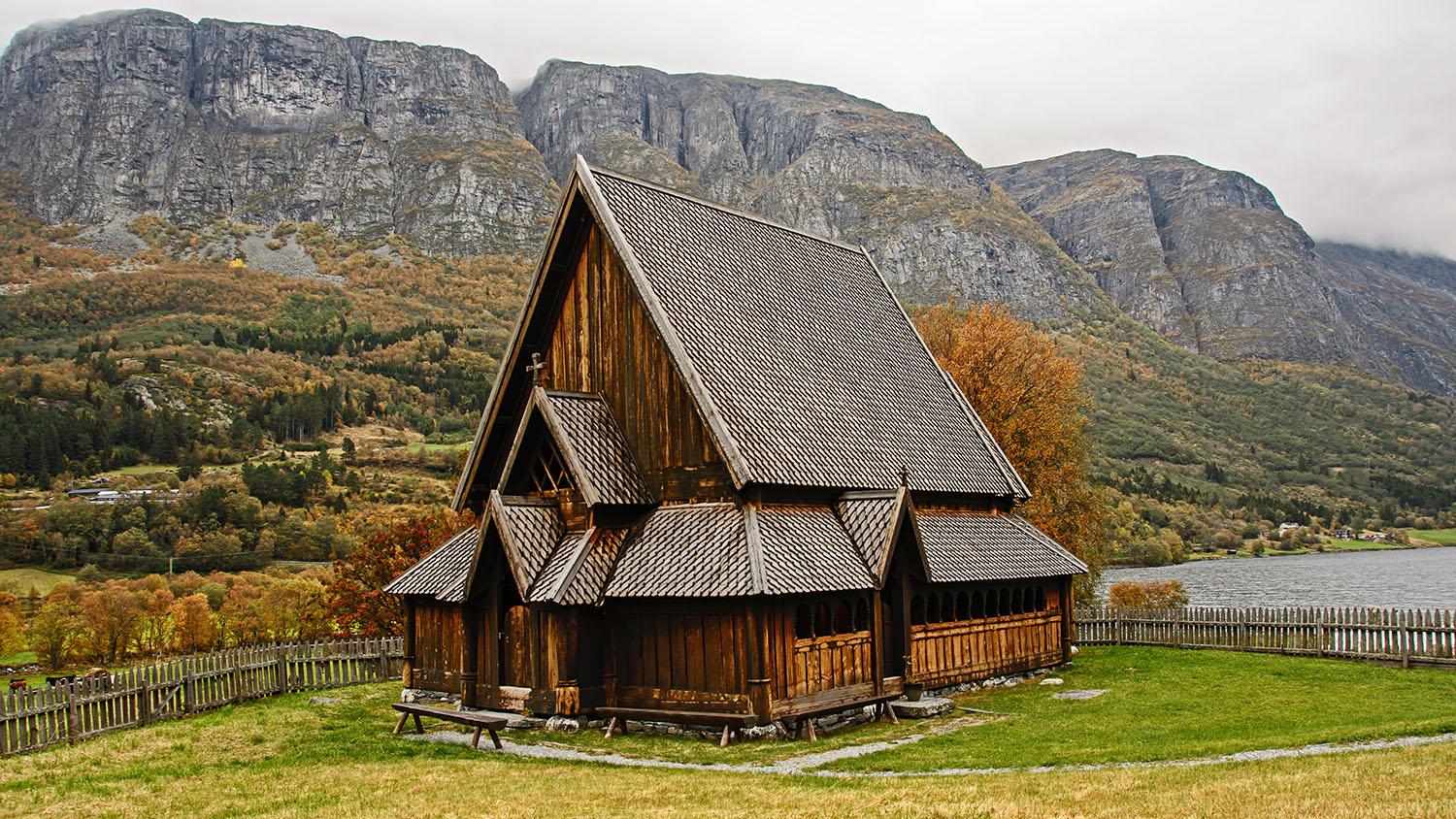 Øye
ØyeØye Stave Church
Øye Stave Church was probably built towards the end of the 1100s. Its original location was in the fields facing Vangsmjøsa. This was an extremely wet area, and during the spring flooding the graves were often filled with water and stones had to be added to the coffins in order to lower them down. The church was in a poor state of repair, and it either rotted away or was taken by the wind. 1747 saw the consecration of the new Øye Church. The stave church disappeared. In the 1930s, work had to be done on the foundations of new Øye Church. Under the church floor, Øye Stave Church was found - 156 pieces in total. No one knows why it was stored here. It was in the end decided to erect the stave church, and it was consecrated in 1965. Today Øye Stave Church is used for weddings and Midsummer Mass only. The church has a strong Catholic medieval character with a narrow opening to the choir and pews along the walls only. It features copies of two medieval portals (probably from the 1100s) with capitals and numerous animal decorations. The door has a medieval ring handle. On the altar stands a crucifix dating back to the 1200s, featuring a Christ-figure from the 1300s. The wooden baptismal font from the 1300s is quite unique, and one of the pews in the choir may be from the Middle Ages. In May 2023 a small exhibition about the stave church was opened just across the road from the church. It is accessible during the church's opening hours, and shows a rune stone, a cencer from the old stave church, a sword and a weaving spoon from the Viking age, as well as an axe head from Helin. There is also information about our one thousand year old church history.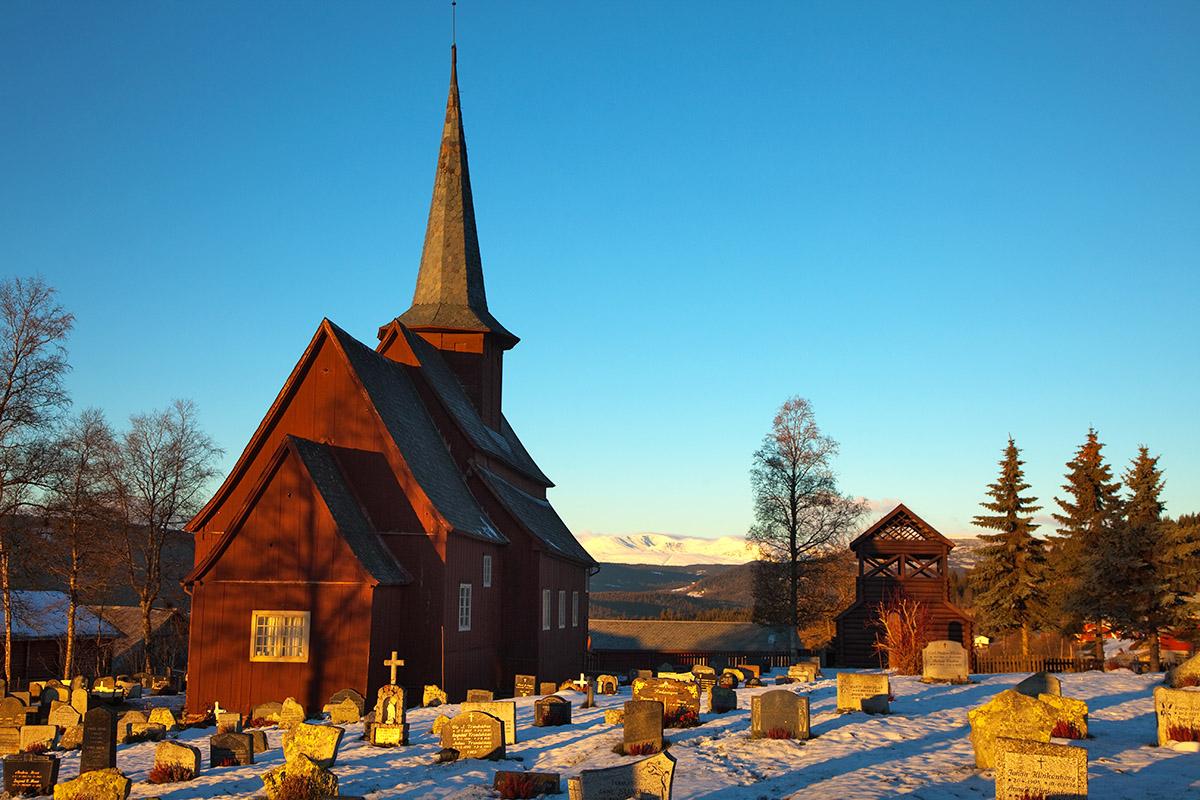 Heggenes
Hegge Stave Church
The Hegge stave church dates back to 1216 and celebrated its 800th anniversary in 2016. The church is still in use as a parish church in the local community. It has a carved gate from the Middle Ages and inside the church you can see the original staves with carved face masks. One of the staves has a runic inscription. The baptismal fountain made of soapstone is from the 1100s and the altarpiece has a unique history which you can read further down. The alterpiece, dating back to 1782, has its own special history. Four men from Hegge were in Gudbrandsdalen to trade livestock, but in the mountains they got caught up in a storm. They promised God that if they were to return home alive, each of them would donate the value of a cow to Hegge Church. They kept their promise, ordered and paid for the altarpiece in Gudbrandsdalen and brought it home on a sledge. Admission: free Guiding for groups can be booked at Øystre Slidre kyrkjekontor, Tel. (+47) 61 35 25 78 or email [email protected]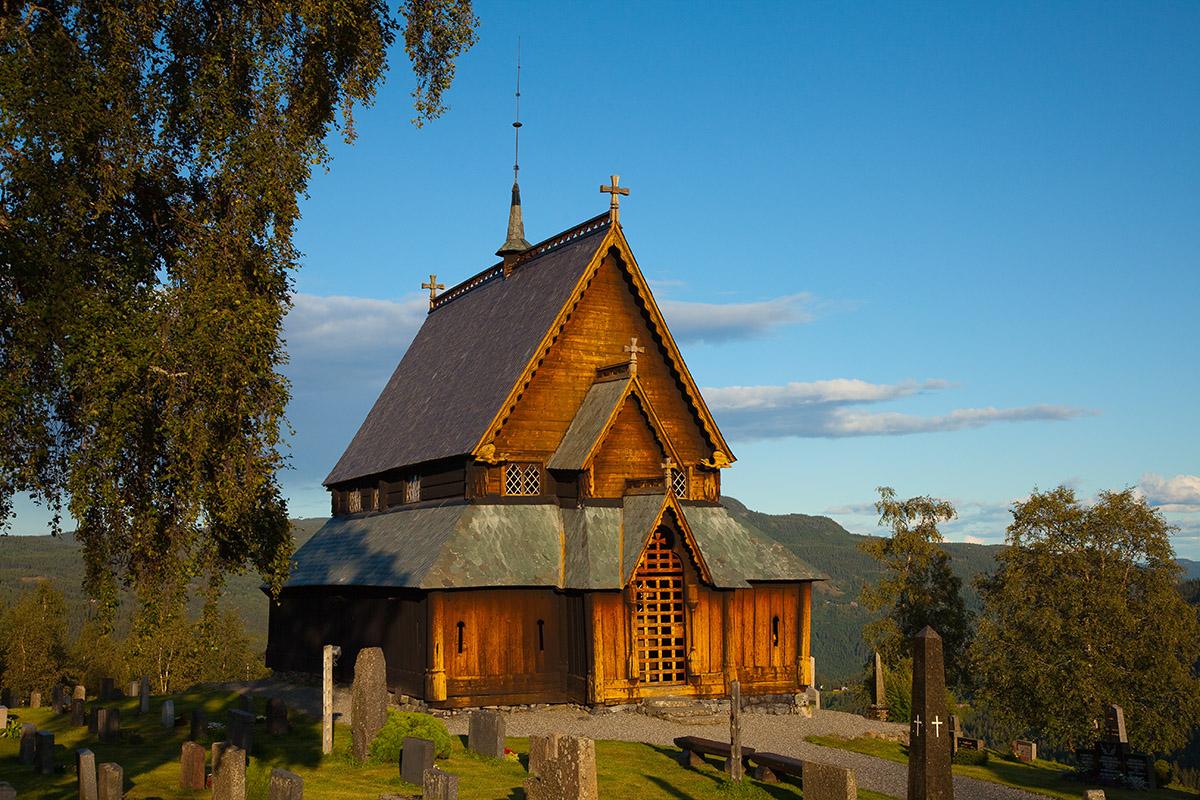 Reinli
Reinli Stave Church
Reinli Stave Church dates back to around 1326. Prior to this, the site has been home to two other churches. The only remains left of the first church are graves, and the second must have burnt down or been demolished. Reinli Stave Church is a parish church, but is only used during summer. For the rest of the year, the chapel further down the road is used. Reinli Stave Church still has 12 medieval consecration crosses. These have been painted black, and are believed to date back to around 1326. Reinli stave church is the only one in Norway with all consecration crosses intact. The altarpiece is a medieval triptych, but it was painted in the 1890s and 1920s. A crucifix hangs on the choir wall. Fittings in wrought iron, the soapstone font and a bell in the belfry are all from the Middle Ages. The wall features a hatch for the leprous, which was used to let them confess and receive Holy Communion. Admission (incl. guiding) Adults NOK 90,- Children 6-16 years NOK 50,- Family NOK 250,- Groups NOK 70,- per person (minimum 10 people) No student or senior discounts. Visits out of hours on request, minimum charge NOK 500,- Please note that we cannot accept foreign currencies, i.e. Euro.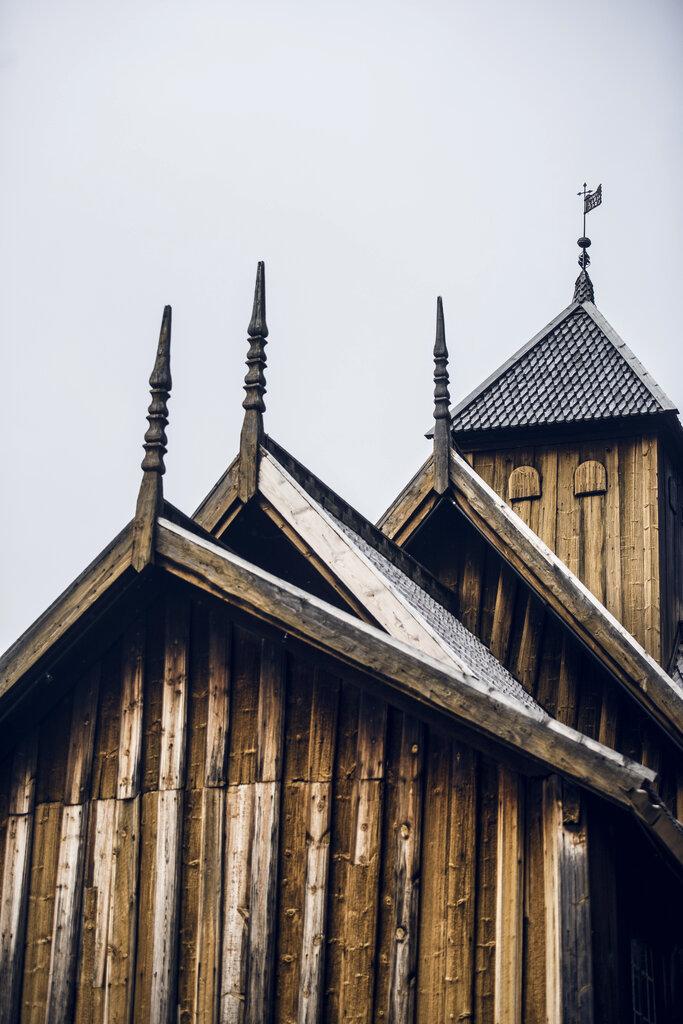 Uvdal
UvdalUvdal Stave Church
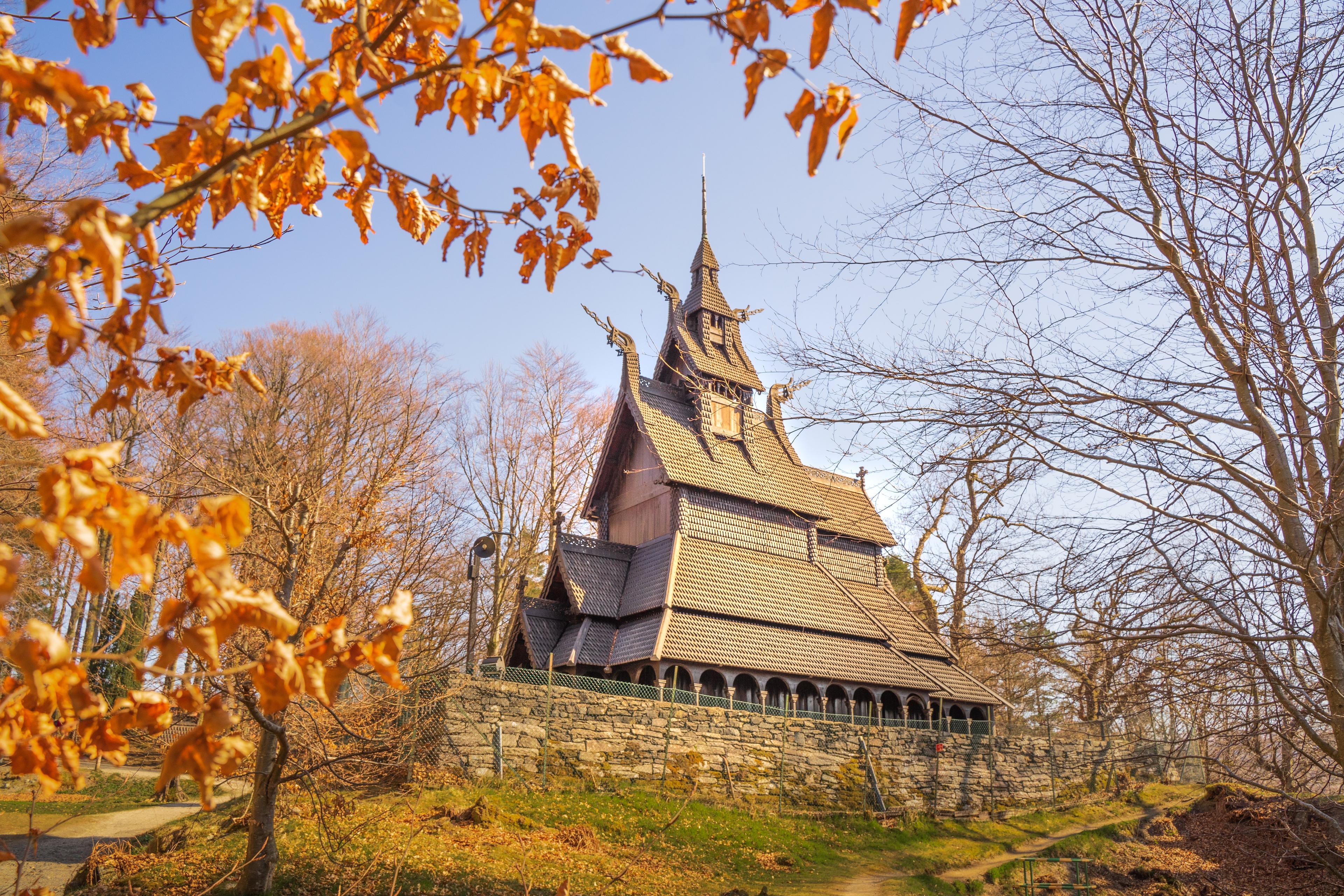
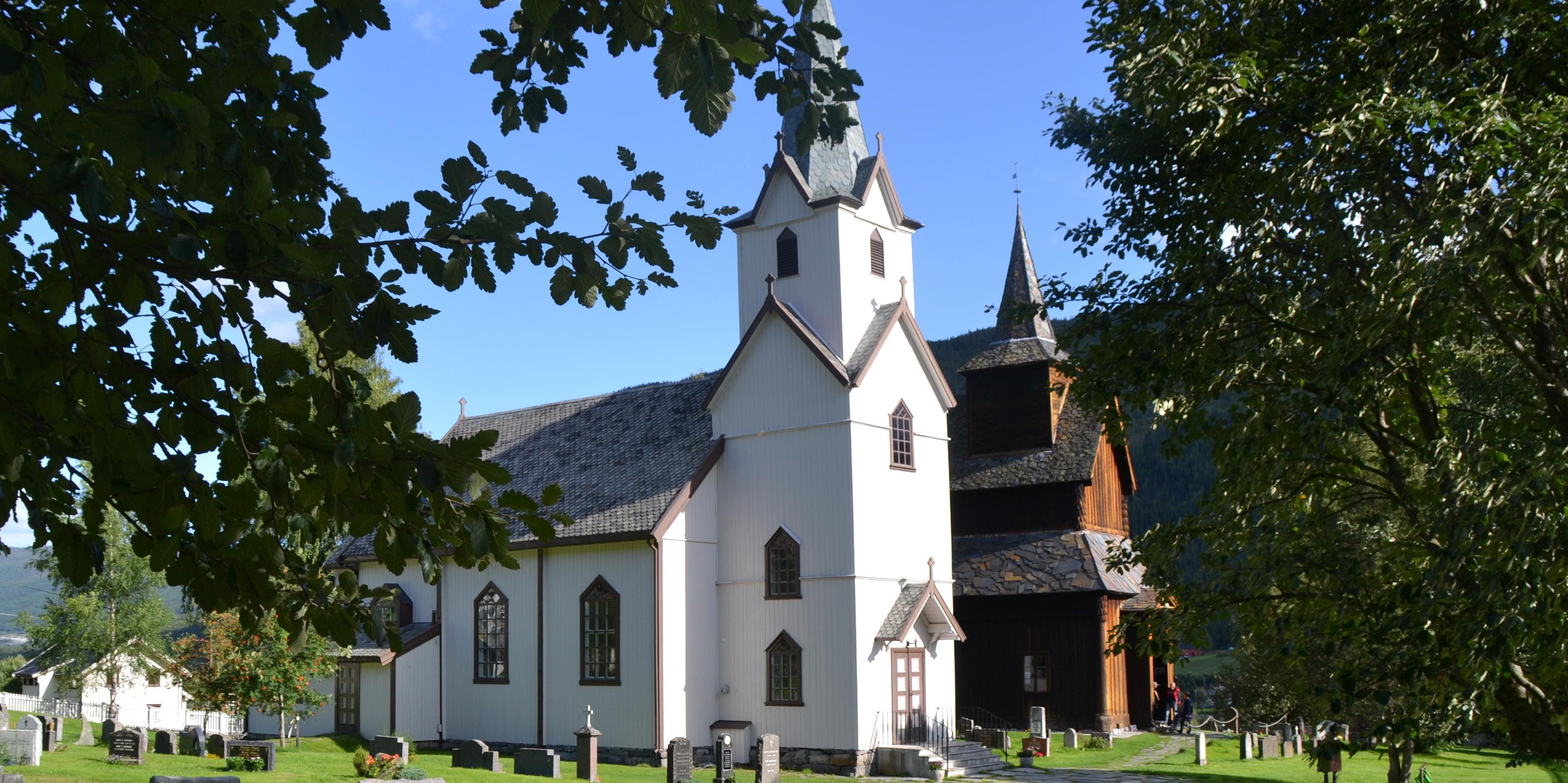
Uvdal Stave Church, as it stands today, does not have its original appearance but is a result of steady expansion and modifications until the 1800s. Each century has added something to it, and so the Church has become a beautiful and quaint example of how building style and decoration from several periods may merge into a rich and harmonious whole. In 1978, excavations were conducted in Uvdal Stave Church. One found among other items over 500 coins beneath the floor. From these we can conclude that the church was probably built at the end of the 12th century. Another interesting discovery was distinct holes in the ground made by pillars from an even older building, that also probably being a church. In one of these holes were two coins from the beginning of the same century, which may indicate the age of the first church. We do not know how this church might have looked or indeed its size. Facilities: Church Distance: 7.4 km. Location: Rødberg Time: 7 min. / car


Offres à ne pas manquer
Voici une sélection de tour-opérateurs pour un voyage réussi.
 Brim ExplorerExcursions tranquilles dans les fjords à bord de catamarans électriques primés à Oslo, Tromsø, Lofoten et Svalbard.
 CityboxHôtels modernes et abordables situés dans le centre d'Oslo, de Bergen et de Kristiansand.
 NorgesbookingRéservez votre chalet pour un séjour parfait dans les fjords, les montagnes ou les vallées de Norvège.
 Scandic HotelsDécouvrez la fine fleur de l’hospitalité norvégienne dans plus de 90 hôtels répartis dans tout le pays des fjords. Offres spéciales disponibles.
 StrawberryUne société hôtelière différente ! Elle propose d’excellentes offres pour le weekend dans plus de 100 hôtels en Norvège.
 Thon Hotels ASSavoureux petit-déjeuner inclus ! Découvrez le vrai confort et des prix raisonnables dans plus de 80 hôtels en Norvège.
 CampcationRéservez un séjour en camping dans des lieux étonnants et uniques dans toute la Norvège avec Campcation.
 Classic Norway HotelsQuand l'hôtel devient une destination en soi... Réservez une nuit inoubliable dans l'un des hôtels uniques les plus emblématiques de Norvège.
 50 Degrees North NordicChoisissez l’un de nos itinéraires individuels sur mesure inoubliables et des circuits en petits groupes exclusifs en Norvège.
 Radisson HotelsDes offres avantageuses et des séjours confortables de qualité dans les principaux aéroports, villes et stations de ski de Norvège.
 Authentic ScandinaviaDes conseils voyage dispensés par les locaux. Nos itinéraires sur mesure s’adaptent à tous les budgets et tous les styles de voyage.
 Booknordics.comDes forfaits de vacances uniques, des hôtels d'aventures, des itinéraires et des activités.
 Fjord ToursCréateur de Norway in a Nutshell, l’itinéraire le plus célèbre de Norvège. Fjords, montagnes et destinations exceptionnelles en un seul trajet!
 Go FjordsRéservez des excursions et des expériences fantastiques ! Nous proposons des excursions à Oslo, Bergen, Stavanger, Lofoten, le cap Nord, etc.
 HurtigrutenDécouvrez le plus beau voyage en mer lors d’une croisière inoubliable le long du magnifique littoral norvégien.
 Norrøna AdventurePréparez-vous à des expéditions et à des vacances aventureuses avec Norrøna Adventure. Randonnée, ski et vélo.
 Discover NorwayOffre une gamme de vacances autoguidées passionnantes ! Au programme : randonnée, vélo et ski en Norvège. Transfert des bagages inclus.
 Norwegian HolidaysVacances forfait à bas prix avec Norwegian. Réservez votre vol, votre hôtel et votre voiture de location au même endroit.
 StrömmaVisites touristiques en bus et en bateau dans plusieurs villes et sites touristiques majeurs de Norvège.
 Up NorwayUn luxe sur mesure sélectionné par des experts locaux. Nous allions vos préférences à nos connaissances pour vous concocter un voyage inoubliable.
 Arctic Campers ASLa van life vous tente ? Découvrez la Norvège avec style et confort dans nos camping-cars élégants et confortables.
 Auto EuropeUne expérience de location de voiture impeccable à chaque fois. Recherche et comparaison des tarifs de location. Annulation gratuite jusqu'à 24 heures avant la prise en charge du véhicule.
 NOR-WAY BussekspressAdmirez de sublimes panoramas à bord de nos confortables autocars express qui sillonnent les fjords et relient les grandes villes entre elles.
 Rent-A-Wreck of Scandinavia ASL'alternative intelligente et abordable à la location de voitures.
 SJ NordSJ NORD- L'aventure commence dans le train
 Vy expressDécouvrez la Norvège à bord d’autocars express confortables qui font la liaison entre les grandes villes, les montagnes et les fjords.
 Vy TrainTraversez les paysages en train entre Oslo et Bergen sur le Bergen Railway et explorez la grande périphérie d'Oslo.
 My Nordic TravelChoisissez entre des itinéraires à composer vous-même et des vacances organisées vers les plus belles destinations de Norvège.
 CampanyonCamping unique en pleine nature. Réservez une cabane dans les arbres ou une tente de glamping, ou louez un emplacement pour camping-car.
 NorwegianNorwegian propose des vols bon marché en Norvège et des vols directsdepuis plus de 70 aéroports européens. Réservez des vols via notrecalendrier bas prix vers vos destinations préférées!
 De HistoriskePassez un séjour inoubliable dans l'un des hôtels historiques uniques et authentiques de Norvège. Savourez des expériences gastronomiques de premier ordre et profitez d'un large éventail d'activités.
 CampioLe plus grand site de réservation de camping en Norvège. Trouvez les meilleurs emplacements de camping et de camping-car dans l’ensemble de la Norvège.
 Benzini CampersL'aventure de votre vie commence ici. Réservez dès maintenant un camping-car avec Benzini Campers.